
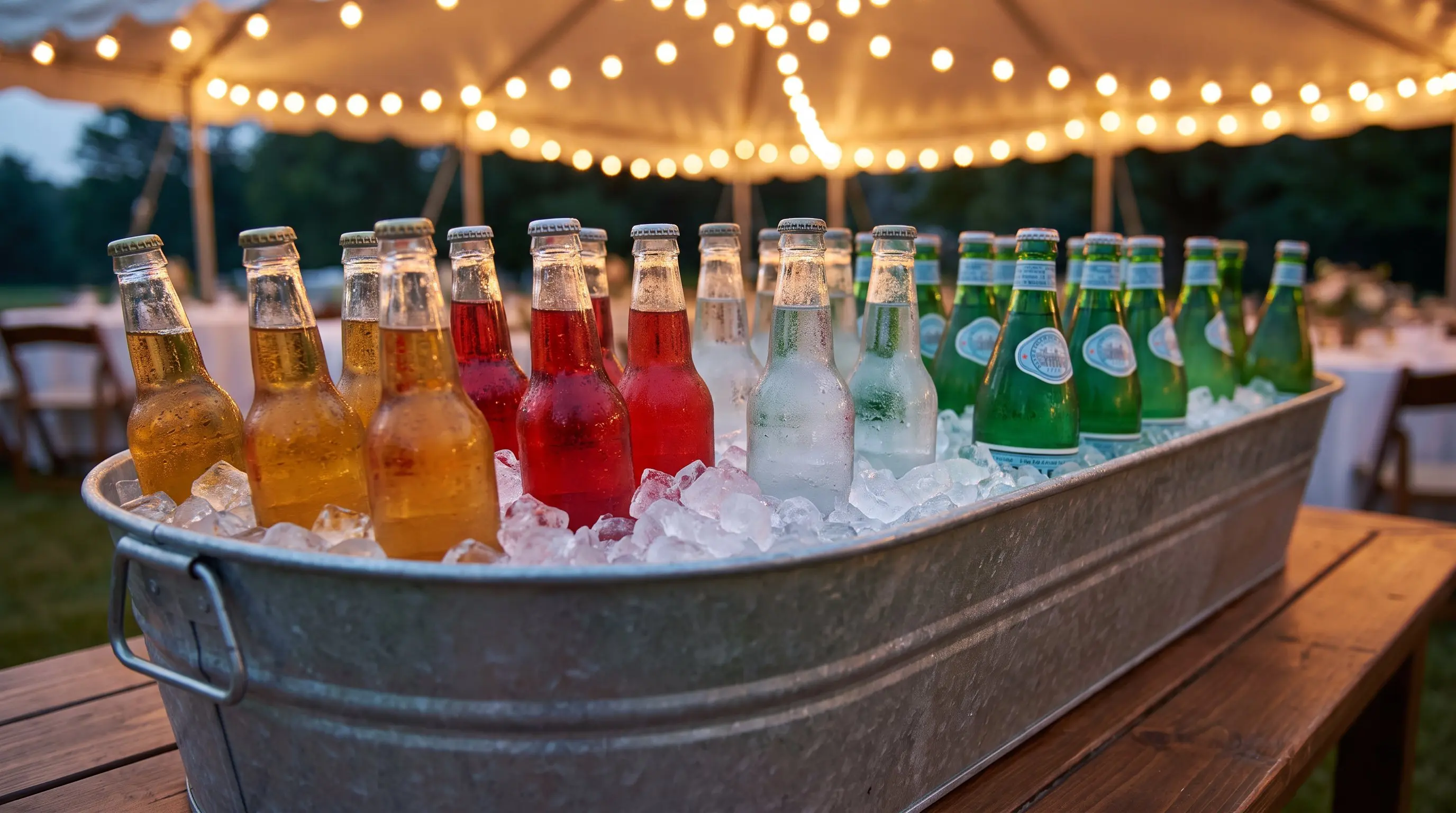
The drinks are the easiest part of an event to get wrong, because everyone guesses. Guess low and the host is at a gas station at nine o’clock buying warm two liters. Guess high and there are eleven cases of lemon lime in the garage for the next year. We deliver drinks for weddings, quinceañeras, corporate parties, church events, school functions and backyard birthdays every week out of our South Los Angeles warehouse, so here is the math the caterers use, written down.
Planning an event? Browse the soda, water and mixers categories, or send us the guest count and the date and we will draft the order.
Step one: drinks per guest
The rule caterers use is simple. Count on two drinks per guest in the first hour and one drink per guest for each hour after that. A four hour event is about five drinks per guest. That number covers everything, not just soda: water, sparkling water, juice, soda and whatever else is on the table.
Adjust it for three things. Heat: add one drink per guest for an outdoor event in a Los Angeles summer. Kids: they drink more soda and less of everything else, so count them at the same total but shift the mix. Alcohol: if there is a bar, the non alcoholic count drops to roughly two thirds of the number above, because part of the crowd is drinking something else.
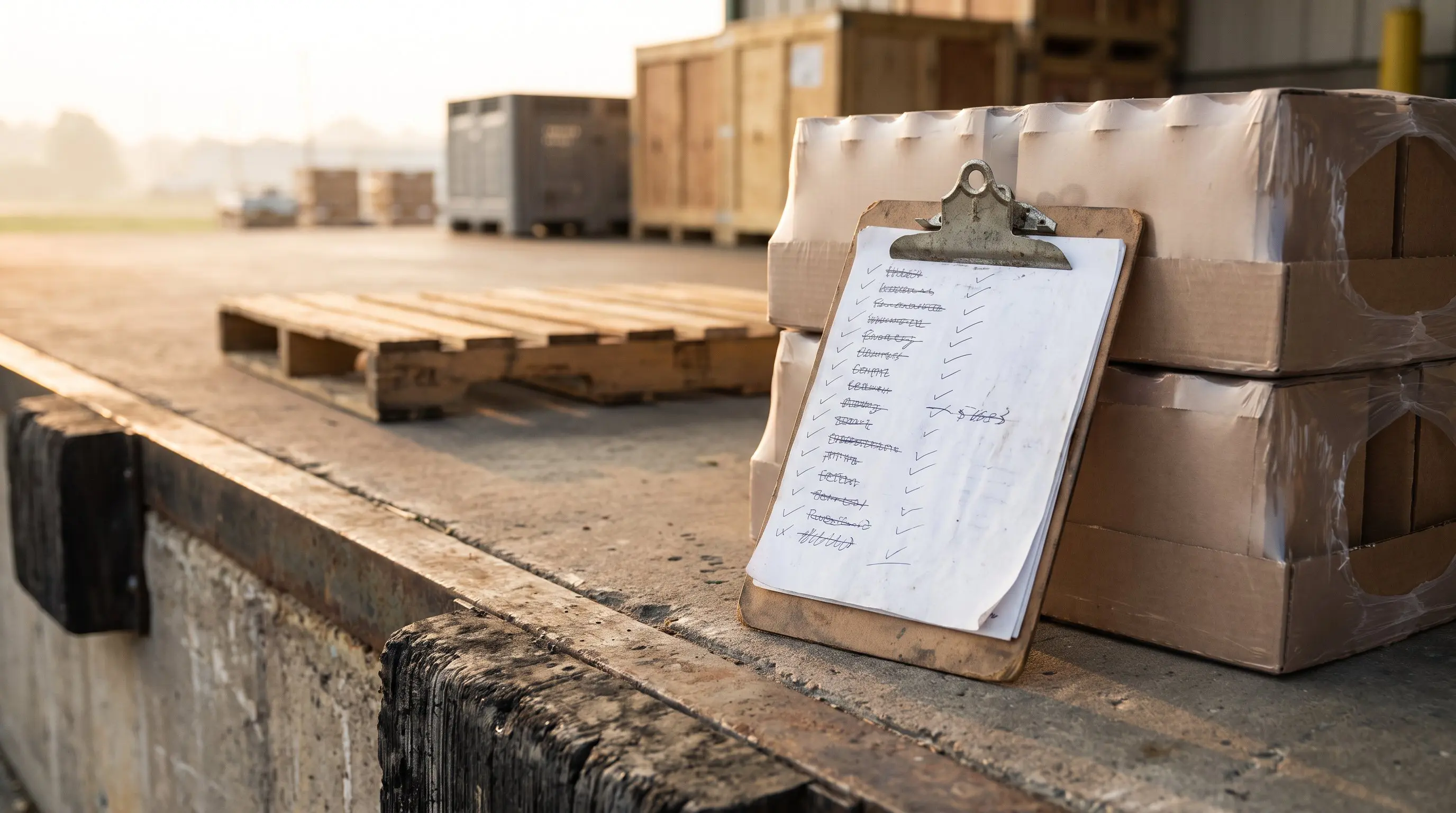
Step two: turn drinks into cases
Most of what we deliver is in 24 packs. Sparkling mineral water is often 12 packs, Ramune is 18, and a few specialty items are 12. Divide the total drinks by the case size and round up, always up. For one hundred guests at a four hour event, that is about five hundred drinks, or twenty one cases of 24. Round to twenty two and you have a buffer for the guest who takes a second bottle to the car.
The mix matters more than the total. A mix that works for most crowds:
- Water, still, 30 percent. The most under ordered item at every event. People drink it all night.
- Soda, 35 percent. Cola, diet cola and lemon lime cover most of it. Add one fruit flavor for the kids.
- Sparkling water, 15 percent. Topo Chico or Tehuacán in glass reads as an upgrade and costs little more.
- Juice and lemonade, 10 percent. For the kids’ table and the guests who do not drink soda.
- Something special, 10 percent. Mexican glass bottles, Ramune, a ginger beer, a non alcoholic beer. The drink people remember.
If there is a bar, add mixers on top of the count: tonic, club soda and ginger beer from the mixers category, roughly one bottle per three cocktails.
Step three: glass or cans
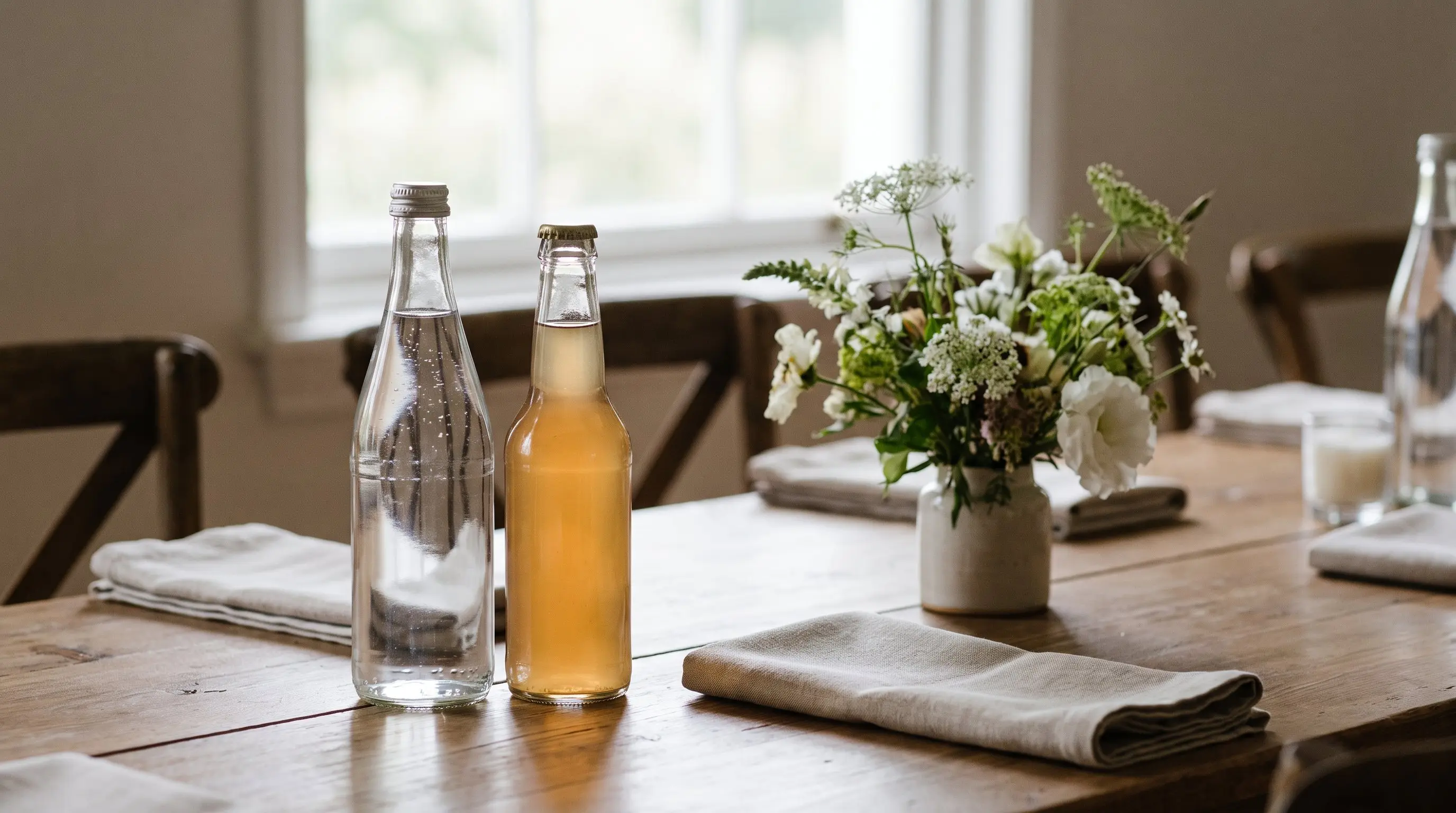
Glass wins for anything with a table. Weddings, dinners, quinceañeras, any event where the drink sits in front of a guest. A Jarritos or a Topo Chico on a white tablecloth is a decoration. Cans win for anything standing, moving or near a pool: company picnics, sports events, kids’ parties, beaches. Cans chill faster, stack tighter and nobody drops a can on a pool deck.
Two hybrids work well. Glass for the head table and cans for the crowd, or glass sparkling water for everyone and cans for the soda. Either way, remember CRV applies to every bottle and can and it is itemized on the invoice, so the client’s budget line is exact.
Step four: ice, and the thing everyone forgets
Plan one pound of ice per guest for chilling plus a half pound per guest if drinks are served in cups over ice. For one hundred guests that is a hundred and fifty pounds, which sounds like a lot until you watch it disappear at two in the afternoon in August. Drinks go into the ice at least two hours before service, in tubs, not coolers with lids, so guests can see what is on offer. Fill each tub with one type: water in one, soda in another, the special bottles in a third. Mixed tubs get picked over and the last tub always ends up full of warm diet cola.
The thing everyone forgets is the second wave. Chill half the order in tubs and keep the other half in a shaded spot behind the service table. When the tubs drop to a third, restock and add ice. An event that runs out of cold drinks at hour three had the right count and the wrong staging.
Step five: order it as one delivery
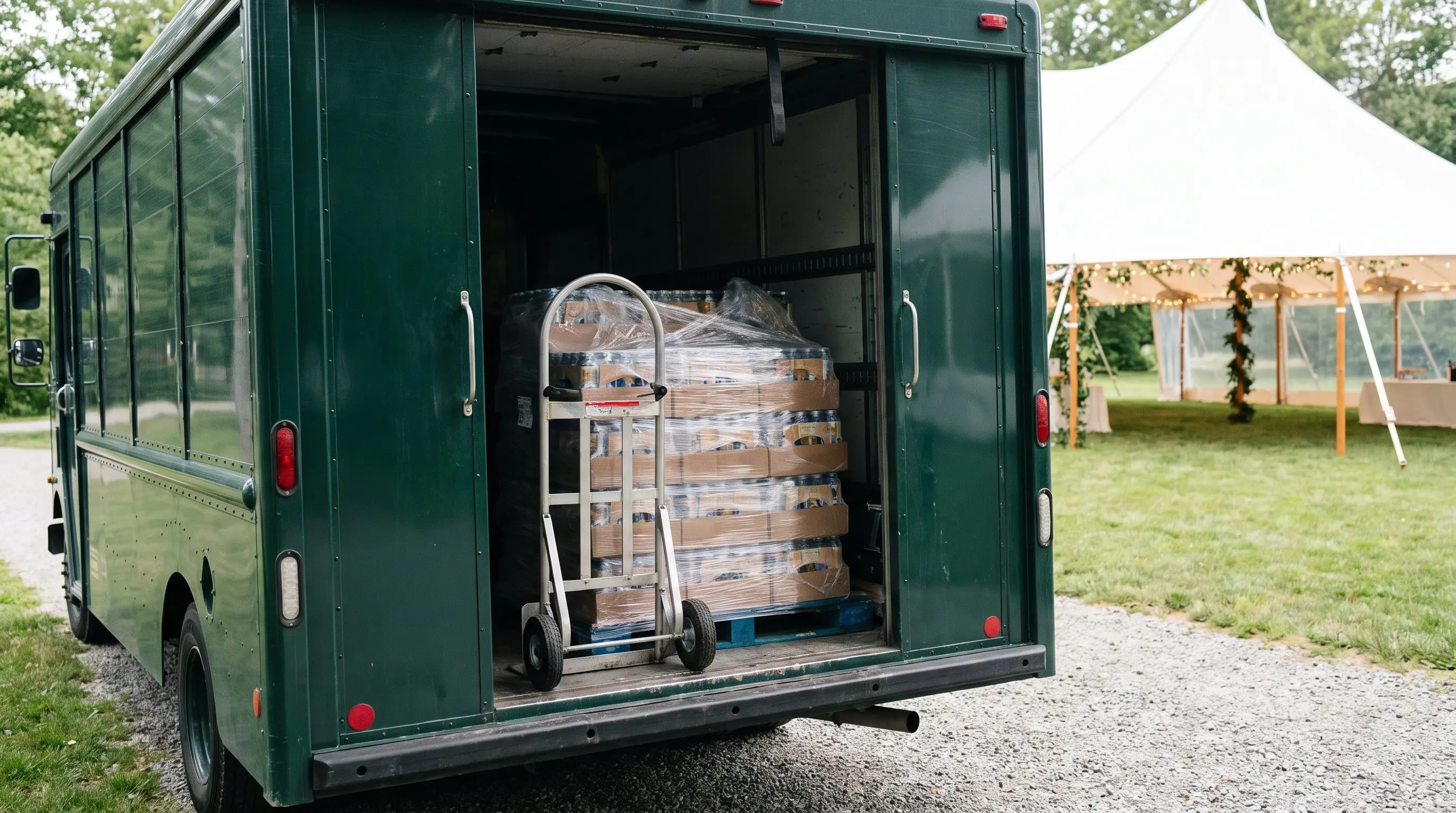
The club store run is three trips, a car full of warm cases and a receipt with no CRV breakdown. A wholesale order is one delivery, cold cases straight off our truck, and an invoice a client can read. Local events around Los Angeles ride on our own trucks, and larger events anywhere in the country ship on wrapped pallets. The catalog runs past two thousand items, so the special bottle the host wants is almost always in it: Mexican glass, Japanese Ramune, Australian ginger beer, Italian sparkling, and the new non alcoholic beers for the guests who are driving.
Enter the delivery ZIP in the checker at the bottom of any page to see the zone and the case minimum. For an event order, the minimum is rarely the problem. Twenty two cases clears it in every zone.
A worked example: a quinceañera for 150
Four hours, an indoor hall in the evening, a bar for the adults, a kids’ table. Drinks per guest: five. Total: seven hundred and fifty. Bar in play, so the non alcoholic count is about five hundred. Cases of 24: twenty one. The mix:
- Six cases of still water in bottles.
- Seven cases of soda: three cola, one diet cola, two lemon lime, one fruit flavor for the kids.
- Three cases of sparkling water in glass, 12 packs, so six 12 packs.
- Two cases of juice and lemonade for the kids’ table.
- Three cases of Mexican glass: Jarritos mandarin and tamarind, and a Sidral for the grandparents.
- Mixers for the bar on top: two cases of tonic and club soda, one of ginger beer.
- Two hundred and twenty five pounds of ice, from the caterer or a separate ice run.
That is one order, one delivery, one invoice, and nobody at a gas station at nine o’clock.
Leftovers, and how to make them small
Unopened cases keep for months in a cool garage, so a small buffer is never wasted, but a large one is money sitting on a shelf. Two habits keep leftovers small. Order the core items, water and cola, at the full count, and order the specialty bottles at two thirds of their share, because those are the ones that end up in the garage. And stage the second wave in the shade rather than in the tubs, so what does not get opened stays clean, dry and resellable. Hosts who do both usually finish an event with two or three cases left, not eleven.
Frequently asked questions
How many drinks per person for a party?
Two in the first hour and one per hour after that, for everything non alcoholic combined. Add one per guest for outdoor events in summer. If there is a bar, plan about two thirds of that for the non alcoholic side.
How many cases of soda for 100 guests?
For a four hour event, about twenty one cases of 24 across all drinks, with soda around a third of that. Round up to twenty two for a buffer.
Should I serve glass bottles or cans at an event?
Glass for seated events and anything on a table. Cans for standing, moving or poolside events. Many hosts do glass for the head table and cans for the crowd.
How much ice do I need for a party?
One pound per guest to chill, plus a half pound per guest if drinks are served in cups over ice. Chill drinks in open tubs two hours ahead and keep a second wave shaded for restocking.
Can you deliver event drinks in Los Angeles?
Yes. Local orders ride on our own trucks from the South Los Angeles warehouse, and larger orders ship on pallets anywhere in the country. Enter the venue ZIP in the checker at the bottom of any page to see the zone and minimum.
When you have the guest count and the date, send them over and we will draft the order, or build it yourself from the full wholesale catalog.